Welcome to Kyrgyzstan
A local's guide to the land of celestial mountains, fermented horse milk, and the soul of the nomad.Created February 22 2026 | Updated September 02 2026
Kyrgyzstan is one of those places that most people can't point to on a map — and that's exactly what makes it special. Landlocked in Central Asia, sandwiched between China and Kazakhstan, it's the country farthest from any ocean in the world — a land of absurdly beautiful mountains, nomadic traditions that are still very much alive, and a hospitality culture that will make you feel guilty for every time you didn't invite a stranger into your home.
A former Soviet republic that gained independence in 1991, Kyrgyzstan is still finding its footing — and that's what makes it exciting. The capital, Bishkek, is a surprisingly green, laid-back city with wide Soviet-era boulevards, a growing café scene, and mountains visible from almost every street. Beyond it, Karakol is the gateway to alpine trekking and skiing, Osh is the ancient Silk Road city in the south with a 3,000-year-old bazaar, and Cholpon-Ata sits on the shores of Issyk-Kul — one of the largest alpine lakes in the world, where locals flock every summer.
I grew up here. So instead of giving you the usual "top 10 things to see" listicle, here's the stuff I actually tell my friends before they visit — the apps you need, the food you can't miss, and the places you have to see.

🌤️ Current Weather
Live✈️ Pre-Arrival
The stuff to sort out before you board the plane.
🛂 Visa Information
Planning your entry is easy thanks to Kyrgyzstan's traveler-friendly visa system.
- •Visa-Free Travel: Citizens from over 60 countries (including the EU, UK, US, Canada, and others) do not need a visa for stays between 30 and 90 days.
- •E-Visa: If you're not from a visa-exempt country, apply online via the official e-visa website.
- •Important: You must provide exact entry and exit dates. E-visa holders must enter through designated airports and land borders listed on the website.
Check visa requirements and apply via the official e-Consul portal. US citizens can also review the US State Department page for Kyrgyzstan.
💡 Good to Know
- •Theft is uncommon, but stay vigilant in restaurants, bars, and crowded markets. If you need to report a theft, file a written report at the police reception office — you'll get a receipt within three working days.
- •Emergency numbers: 112 (international emergency), Fire 101, Police 102, Ambulance 103.
- •Almost every restaurant has an Instagram page with the full menu and prices. Just search the name. You can also cross-check on TripAdvisor first, then look them up on Instagram.
- •People use Instagram to communicate. Looking for local excursions or day trips? Search Instagram and don't hesitate to DM the owners directly.
- •I recommend Yandex Go for taxis — buses can get very crowded, hot, and cramped. But if you want to try them: wait at a stop, pay 20 KGS cash for a ticket or 17 KGS by card. Use the Moy Gorod app (iOS / Android) to track buses in real time.
🏥 English-Speaking Clinics
Ambulance is 103, but don't expect English. Get travel insurance before you arrive — it'll cover most private clinics below.
- •Eldik Family Medical Center — American-founded family medicine clinic. Great for general checkups and minor issues. Website · Instagram
- •NEOMED — Multi-specialist clinic, most popular with expats. English-speaking staff on site. neomed.kg · Instagram
- •Kairos Dental — English-speaking dentist. Clean, modern equipment. Website · Instagram
- •MEDI — 24/7 emergency clinic. Limited English but the only option at night. medi.kg
📱 Must-Have Apps
Your phone is your best friend here. Download these before you land and you'll navigate Kyrgyzstan like a local.

Yandex Go
The Uber/Uber Eats equivalent — and a must have. An average taxi ride around Bishkek costs 100–300 KGS ($1.5–$4). Also does food delivery. Download it before you land.

2GIS
Forget Google Maps — it'll send you into someone's backyard. 2GIS has accurate building entrances, floor plans of malls, and even individual apartment locations.

Everyone uses it. Restaurants take orders on it, tour guides communicate through it, and your Airbnb host will send you a voice message at 7am.

The #1 search engine in Kyrgyzstan. Looking for a restaurant? Search Instagram. Trying to find a tailor? Instagram. Need a plumber? You get the idea.

Google Translate
Download Russian and Kyrgyz for offline use. The camera translation feature will save you at restaurants.

Airalo
Get an eSIM before you arrive. Airalo has Central Asia plans that work great. Or grab a local O! or Beeline SIM at the airport for $3-5.
💰 Money, SIM & Getting Around
The stuff nobody tells you until you're standing in the airport wondering why your card got declined.
💰 Money
- •Currency is the Kyrgyz Som (KGS). ~87 som = $1 USD.
- •Cash is still king in bazaars and smaller shops. ATMs are everywhere in Bishkek.
- •I recommend branches of the largest banks of Kyrgyzstan like: Optima Bank, Demir Bank, MBank
- •Bring Visa/Mastercard cards, they work at most restaurants and supermarkets in Bishkek. Outside the capital, bring cash. Amex/Discover will be a little problematic.
- •Don't exchange money at the airport — rates are terrible. Exchange a small amount (10-20$/€) to get by until you can change money in the city.
- •If you bring cash to change it can be Euro or USD, but they will only accept crisp bills without scratches, holes, etc (last time they refused my 100 dollar bill because it had two tiny holes from a staple). They also prefer high denomination like 50 or 100 USD bills, lower they will accept at a higher rate.
- •Tipping isn't expected but appreciated. 10% at nice restaurants is generous.
📶 SIM & Internet
- •Get a local SIM at the airport. O! (Nurtelecom), Megacom or Beeline have the best coverage.
- •The most expensive one will cost around 10-15 USD and it has everything unlimited for 30 days. You'll need your passport. There will be a few kiosks as soon as you get past Passport Control.
- •WiFi is solid in Bishkek cafés and hotels. Outside cities, coverage gets spotty fast.
- •eSIM via Airalo works well if your phone supports it. Set it up before landing.
- •If you plan to stay longer than 30 days, you must register your phone/IMEI at IMEI.kg. Costs around 550 KGS (~$6.30). If you don't register, your mobile plan will stop working.
🚗 Getting Around
- •It’ll take you 10-20$ to get from the airport Manas to Bishkek city center. Prepare to get swarmed by taxi drivers. They will be waiting for you as soon as you exit customs and will fight for you.
- •Yandex Go for taxis. A ride across Bishkek is $3-5.
- •Buses cost 20 som (~$0.23) in Bishkek. You can pay with cash, a Visa card, a Tulpar card (reloadable bus pass), or a QR code if you have a local bank account.
- •For road trips, hire a driver with a car. $50-80/day gets you a 4x4 and a guide.
- •Rent a car only if you're comfortable with aggressive driving and mountain roads with no guardrails. Some rental options: Autopark, Silk Way Trips, Iron Horse Nomads
- •For domestic flights, book through Bookit or MTravel.
🍖 Food & Drinks
Kyrgyz food was designed to fuel you through -30°C winters and 12-hour horse rides. It's heavy, meaty, and absolutely incredible. Vegetarians — I love you, but you'll have a tough time here.
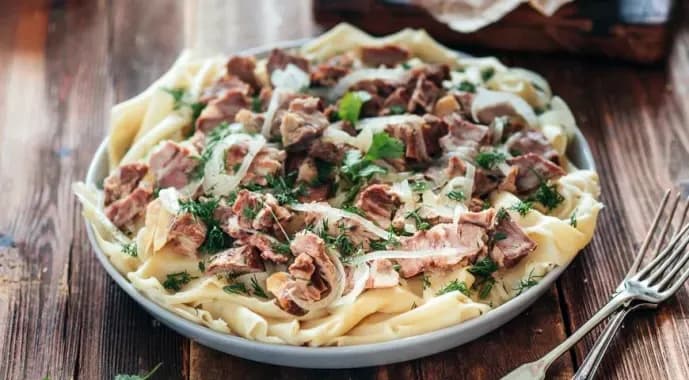
Beshbarmak
The national dish. Literally means "five fingers" because you eat it with your hands. Boiled meat on homemade noodles with onion broth.
Served at every celebration. If a Kyrgyz family invites you over, you're getting beshbarmak. No exceptions.
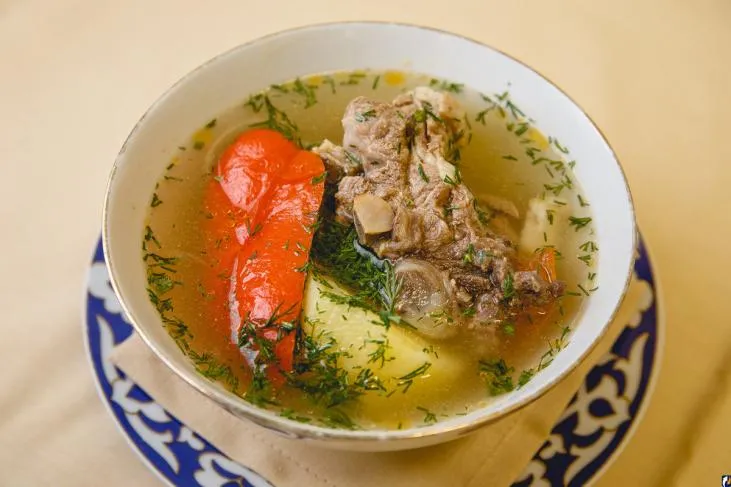
Shorpo
A rich, hearty meat soup with potatoes, carrots, and herbs. The kind of soup that cures everything — hangovers, colds, existential dread.
Every grandmother has a "secret" recipe. The secret is always more meat.
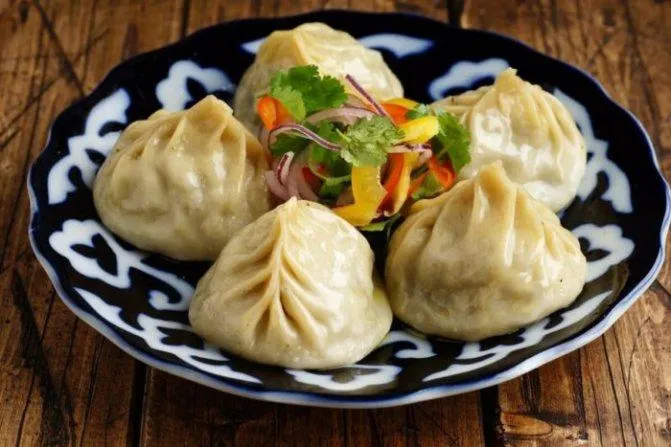
Manti
Steamed dumplings filled with lamb and onions. Juicy, pillowy, and dangerously easy to eat 15 in one sitting.
The proper way to eat them is to bite a small hole first and slurp the broth inside.
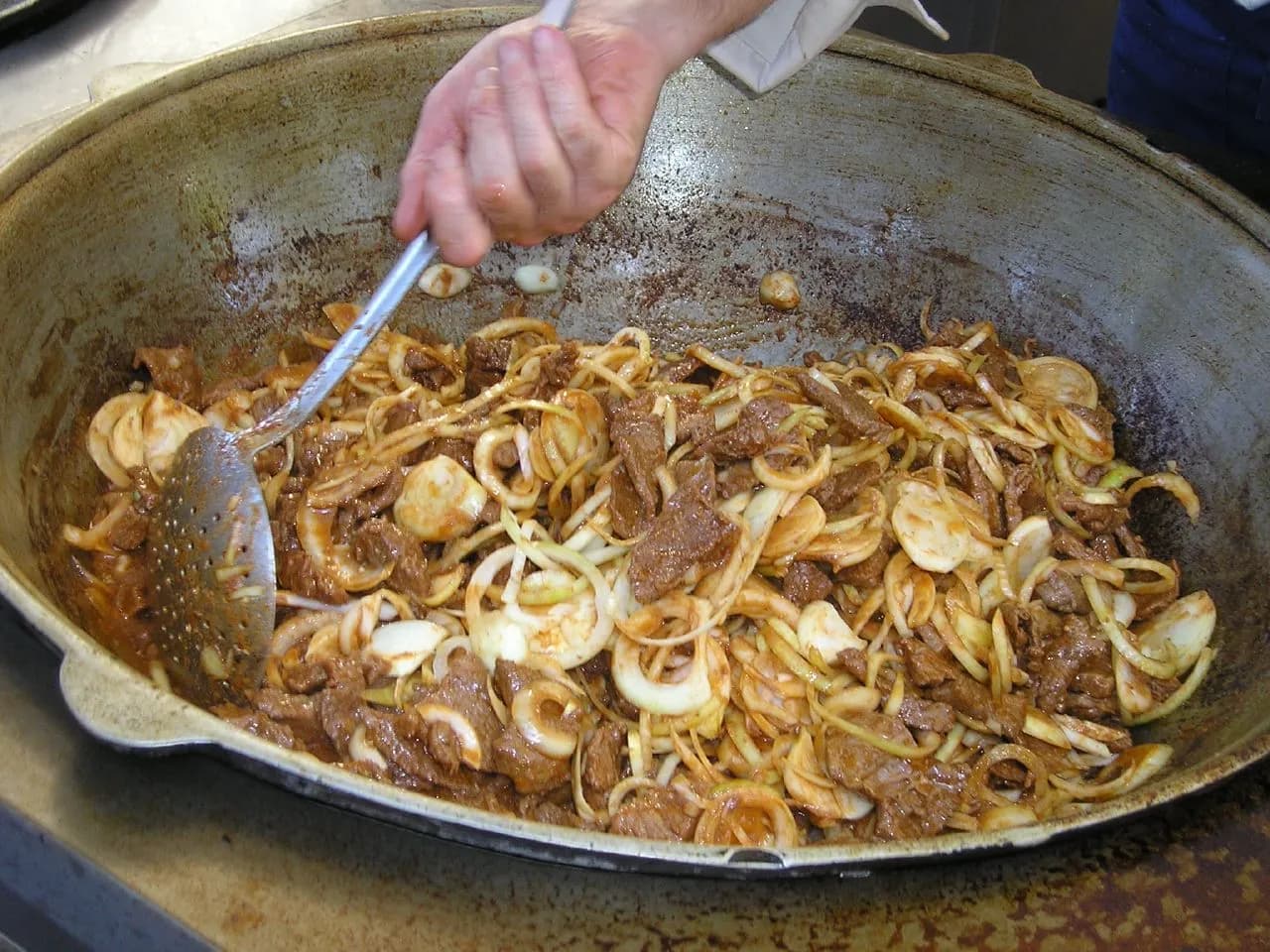
Kuurdak
Fried meat with potatoes and onions. Simple, satisfying, and what everyone actually eats on a Tuesday night.
Originally a nomadic dish — designed to be cooked quickly over an open fire.
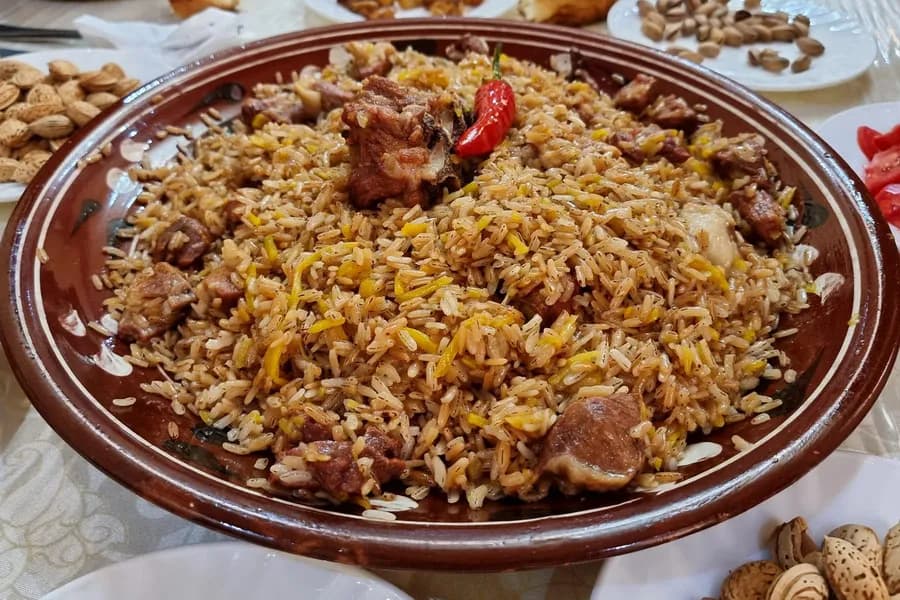
Plov
Rice pilaf with carrots, meat, and a mountain of spices. Every Central Asian country claims to make the best one.
A proper plov is cooked in a massive kazan (cauldron) and feeds 50+ people at celebrations.
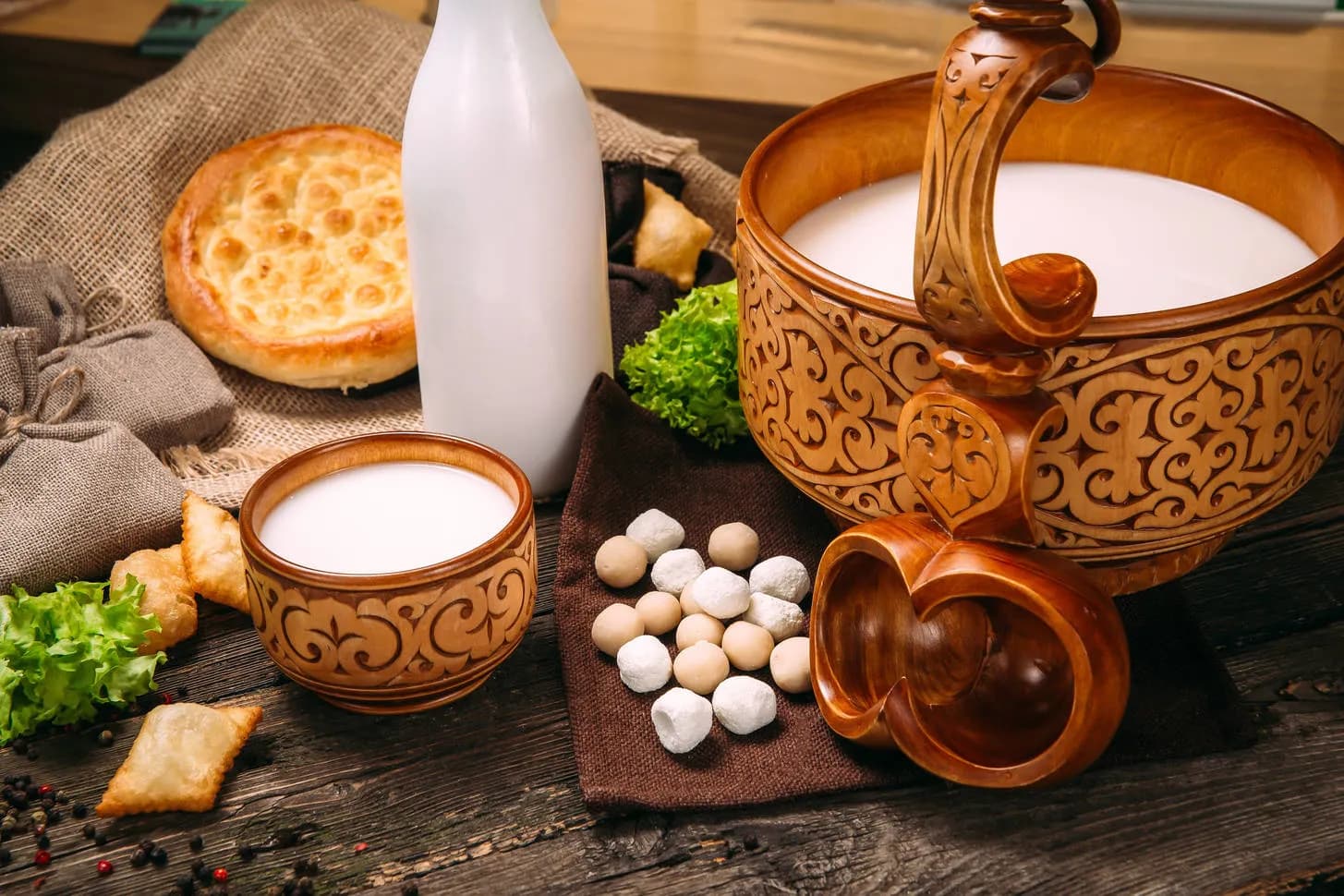
Kymyz
Fermented mare's milk. Yes, horse milk. It's slightly fizzy, sour, and mildly alcoholic. An acquired taste that locals swear is medicinal.
Only available in summer when the mares are milking. Kyrgyz people travel hours to get the freshest batch.
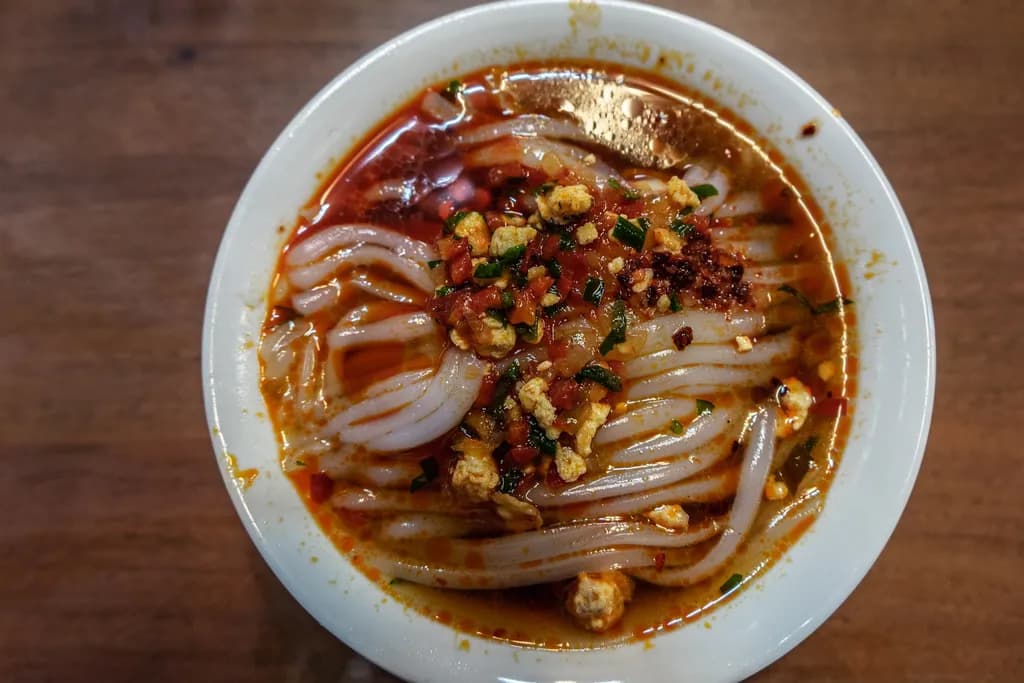
Ashlan-Fuu
Cold noodle soup — sounds weird, tastes incredible. Chewy noodles in a tangy vinegar broth with vegetables. The ultimate summer food.
A Dungan (Chinese-Kyrgyz) dish. Find the best versions in the Dungan villages near Karakol.
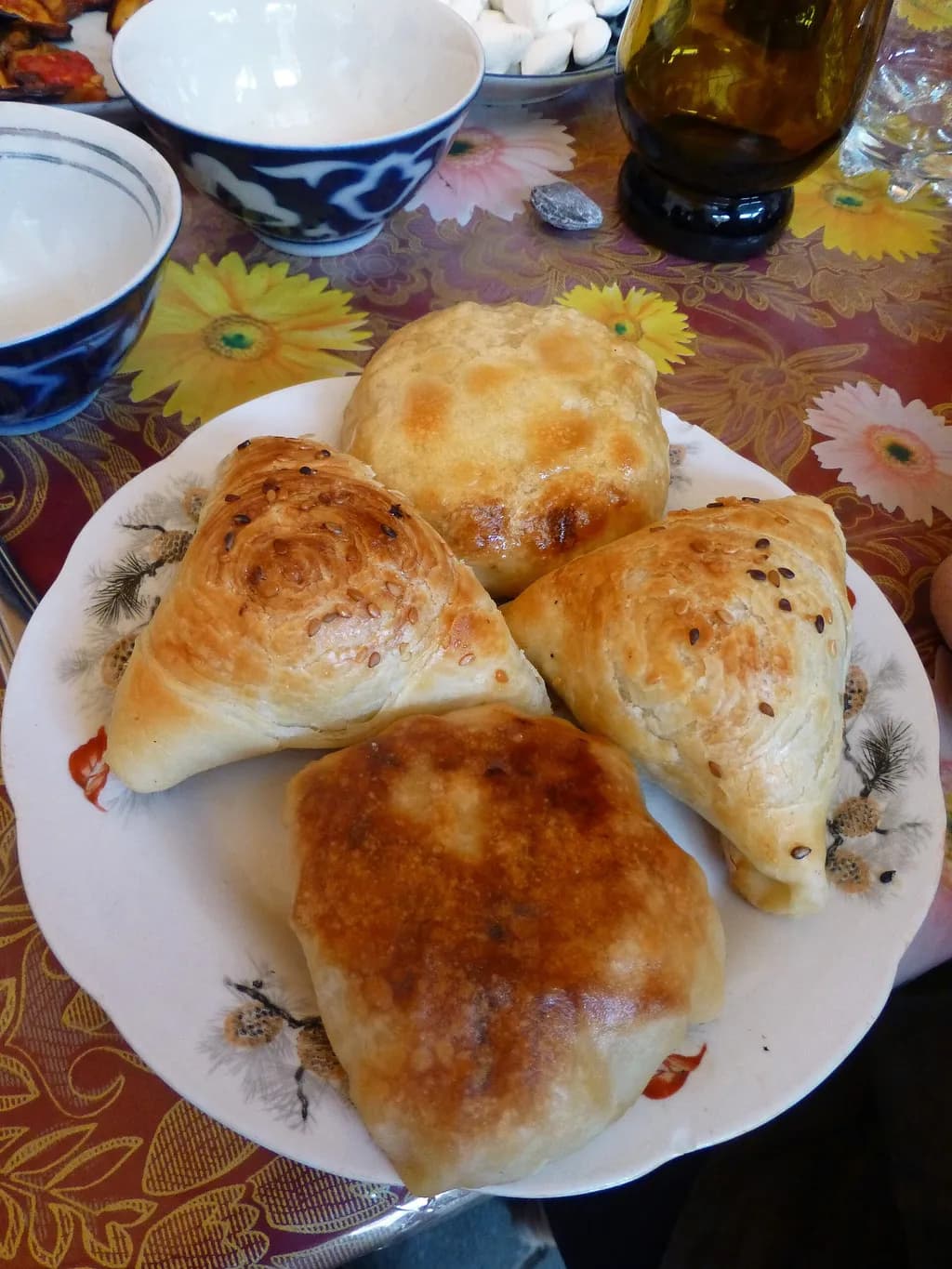
Samsa
Flaky pastry triangles stuffed with spiced meat and onions, baked in a tandoor oven. The Central Asian answer to the empanada.
The best samsas come from street vendors, not restaurants. Look for the ones baked in clay ovens.
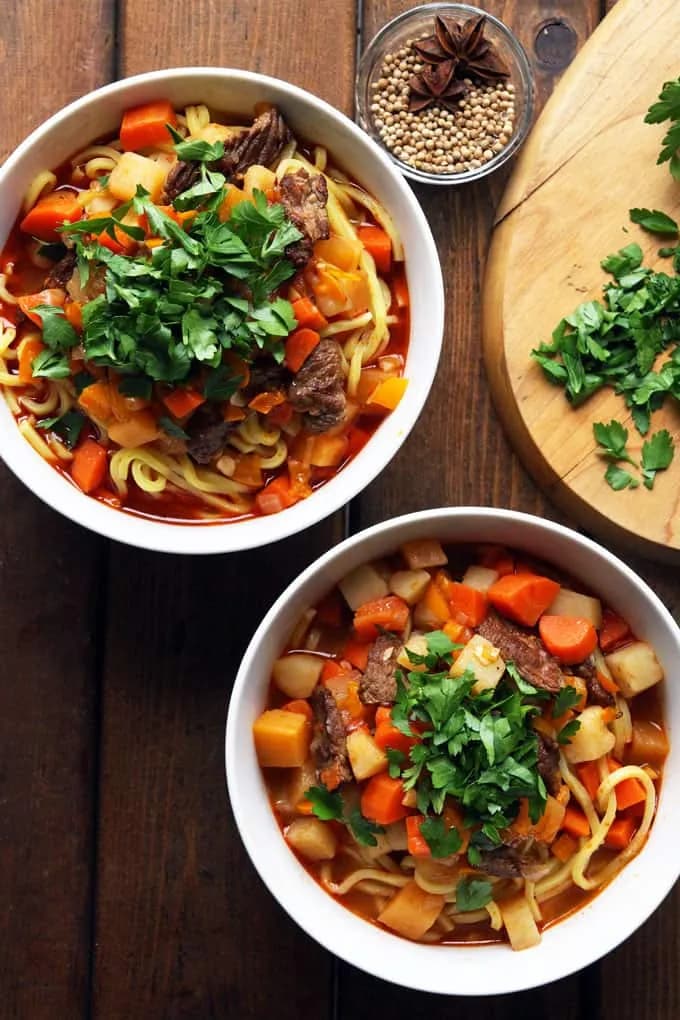
Lagman
Hand-pulled noodles in a spicy tomato-meat sauce with peppers and vegetables. Messy, flavorful, and absolutely addictive.
The noodles are hand-pulled to order. Watch the cook stretch and slap the dough — it's basically a performance.
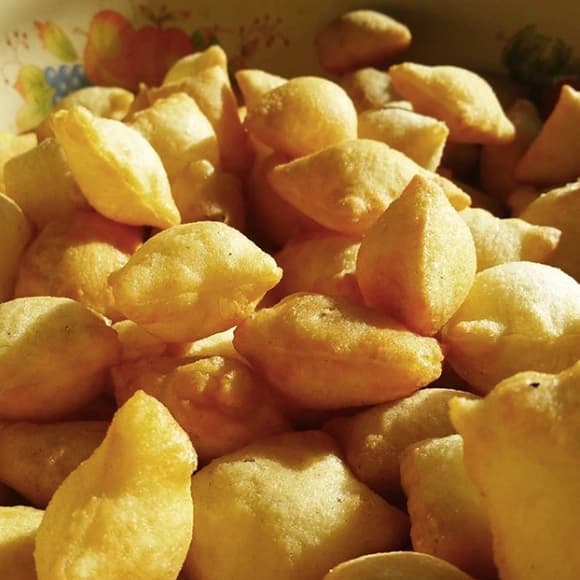
Boorsok
Fried bread diamonds. Puffy, golden, and served with every single meal. Dip them in jam, honey, or kaymak (clotted cream).
No Kyrgyz table is complete without a mountain of boorsok. They symbolize prosperity and hospitality.
⚠️ A Friendly Warning
If you're trying kymyz (fermented mare's milk), bozo (fermented millet drink), raw horse milk, or horse meat shorpo for the first time — your stomach might not be ready. These are an acquired taste and an acquired digestion. Try them at your own risk, and ideally not far from a proper bathroom. You've been warned.
🍽️ Where to Eat
From cheap national dishes to upscale fusion — Bishkek's food scene punches way above its weight. Here are the spots I actually send people to.
Supara Ethno-Complex
$$An upscale cultural experience. Dine in yurts and explore the museum-like grounds. You can try traditional food, horse milk, and horse meat.
Must-try: Beshbarmak, Kuurdak
Navat
$$Colorful, lively, pan-Central Asian cuisine. A perfect, tourist-friendly introduction to local food.
Must-try: Boorsok, Kaymak, Plov, Assorted Samsas
Faiza
$My recommendation. Famous for delicious, authentic, and incredibly cheap national dishes.
Must-try: Gyuro Lagman (or any lagman), Manti
Chef. Tenishev's Restaurant
$$$One of the first restaurants to promote open and interactive kitchens. A fusion of European cuisine with eastern saturation of tastes and futuristic presentation.
Must-try: Tasting menu
Dolce Vita
$$A long-standing Italian classic. Cozy, romantic, and known for authentic pizza and pasta dishes.
Must-try: Wood-fired Pizza
🌙 Nightlife
While I'm not a nightlife enthusiast myself, I've gathered this list of bars and clubs based on recommendations from friends:
🏔️ Things to Do
From multi-day horse treks to eagle hunting demonstrations — Kyrgyzstan is an outdoor playground. Here are the best activities across the country.
Trekking & Hiking
With 94% of the country covered by mountains, hiking is a must. Browse trails and plan your routes on AllTrails.
Hike in Ala-Archa National Park
BishkekA popular day trip from Bishkek for locals and tourists alike. Tours are easily arranged in Bishkek.
Horse Riding Tours
Cultural & Nomadic Experiences
Learn to Make a Shyrdak (Felt Carpet)
Multiple placesThe most famous Kyrgyz craft — intricate wool felt rugs recognized as a UNESCO Intangible Cultural Heritage item. A hands-on craft workshop.
Water Activities
Swim in the Salty Lake (Tuz-Kol)
Issyk-KulExperience Kyrgyzstan's own "Dead Sea."
City Exploration & History
Skiing
Chunkurchak Ski Complex
Bishkek~30 km from Bishkek. All levels, families, modern lifts. Sits at 2,000–2,600 m with a panoramic restaurant, rentals, hotel, and cottages. Open December–March, 9:00–16:30. Great option if you can't make the longer trip to Karakol.
ZIL Ski Base
Bishkek~35 km from Bishkek at 1,800–2,400 m, surrounded by pine forests. Trails for all levels, instructors for beginners. Open December–March, 9:00–17:00.
Kashka-Suu
Chuy~35 km from Bishkek at 2,100–2,700 m. One of the most popular resorts — trails for all levels, rentals, restaurants, and guesthouses. Open December–March, 9:00–16:00.
Too Ashuu
ChuySmall but cozy resort on the Too Ashuu pass at 3,000 m, 120 km from Bishkek. Great for families. Open December–March, 9:30–16:30.
Need gear? SkiPark.kg rents ski, snowboard, and other equipment.
Other Activities
Sip on Shoro at a Street Stall
BishkekTry Maksym (fermented roasted grain drink), Chalap (fermented dairy drink) and Kvas. You'll often see women in red hats ("Shoro eje") serving from large barrels at kiosks along Bishkek's streets. Available April–September.
Looking for concerts and live events? Buy tickets on Kassir.kg.
🏨 Where to Stay
Bishkek has options for every budget — from $11/night hostels with coworking spaces to luxury glamping in the mountains. Here are the places I'd actually recommend.
Hostels
Hotels
Novotel Bishkek City Center
$120/night5-star, indoor pool & spa, central location
Airbnb
Cozy and comfortable apartment in the heart of the city
$44/nightEntire rental, 2 guests, 1BR, 2 beds, 1 bath
Unique Stays
Glamping, mountain cabins, and resorts — the experiences you can't get anywhere else.
Asman Glamping
$100/night💻 Digital Nomad
Bishkek is quietly becoming one of the best remote work bases in Central Asia — cheap cost of living, decent internet, and a government that actually wants you here.
Digital Nomad Visa
Kyrgyzstan introduced an official Digital Nomad Status — made permanent in April 2025 via Cabinet Resolution No. 241.
- Duration: 60 days initial, extendable up to 1 year, renewable for up to 10 years
- Eligibility: Work in digital fields — ICT, software development, creative industries
- Processing: Applications reviewed within 7 working days
Coworking Spaces
All in Bishkek. Most offer day passes if you just want to try them out.
🛍️ Shopping & Souvenirs
Kyrgyzstan is a goldmine for unique, handmade stuff that you genuinely can't find anywhere else. Skip the airport gift shop.
Where to Shop
Instagram Shops
Some of the best local brands sell exclusively through Instagram.
Bargain respectfully: bargaining is expected and part of the fun at open-air markets. In established shops like Tumar, prices are fixed.
What to Buy
Shyrdak (felt rug)
Hand-made felt rugs with traditional patterns. Each takes weeks to make. The ultimate Kyrgyz souvenir.
Ak-Kalpak
More than just a hat, the Ak-Kalpak is a powerful national symbol for Kyrgyz men. Makes a surprisingly good conversation starter back home.
Leather Goods
Look for belts, wallets, and small bags, often decorated with traditional stamped patterns. The quality is generally excellent and durable.
Woven Scarves and Shawls
Made from local wool or silk, these often feature traditional Kyrgyz patterns and are both beautiful and practical.
Chapan (Traditional Robe)
A long, padded outer robe, often made of velvet and worn for special occasions or by respected elders. This is a more substantial and expensive souvenir that makes a stunning decorative piece.
Felt crafts
Slippers, bags, ornaments, toys — everything in felt. Lightweight and easy to pack.
Honey
Kyrgyz mountain honey is world-class. Look for white honey from the At-Bashi region, which is famous for its creamy texture and delicate taste. It's best bought at a bazaar or a specialty food shop.
Dried fruits & nuts
Kyrgyzstan's south is home to the world's largest natural-growth walnut forests (Arslanbob). You can buy high-quality walnuts, pistachios, and delicious dried apricots and plums at any bazaar.
Kurut (Dried Yogurt Balls)
A true taste of the nomadic lifestyle. These hard, salty, and sour balls of dried yogurt are an acquired taste but a very authentic and unique snack. Buy a hygienically pre-packaged version from a supermarket. Goes well with beer.
Kyrgyz "Cognac"
The country produces its own popular brandy, locally called cognac. Brands like "Bishkek" and "Kyrgyzstan" are popular local gifts and a common souvenir for those who enjoy spirits. I'm not an expert in alcohol, but I've heard it's good.
Komuz (National Instrument)
The Komuz is a three-stringed, pear-shaped lute. While a full-sized, playable instrument is a wonderful gift, you can easily find miniature decorative versions that are easy to pack.
Ceramics
Look for hand-painted pialas (tea bowls), small plates, or figurines with traditional blue-and-white design.
🗣️ Common Phrases
Most people in Bishkek speak Russian. In rural areas, Kyrgyz is more common. Either way, even a butchered "Рахмат" (thank you) will earn you a huge smile.
🌍 On the World Stage
For a country of 7 million people, Kyrgyzstan punches way above its weight globally. From tech to sports to children's entertainment — here's what the world doesn't know yet.
🏇 The World Nomad Games
Kyrgyzstan invented them. The first edition was held in 2014 in Cholpon-Ata on the shore of Issyk-Kul with around 400 athletes, built on a simple idea — give the nomadic world its own Olympics before globalization finishes the job. It grew fast. The sixth edition drew 3,000+ athletes from 104 countries across 43 disciplines.
The Games spent a few years abroad — İznik, Türkiye in 2022, then Astana, Kazakhstan in 2024 — before coming home for the sixth edition, 31 August – 6 September 2026, split between Bishkek and Issyk-Kul. The seventh is slated for Kazan, Tatarstan in 2028.

Kok-Boru
ulak tartysh
The main event. Two teams of horsemen wrestle a headless goat carcass across the field and drop it into the opponent’s stone goal. It is the national sport, and UNESCO Intangible Cultural Heritage since 2017.
Er Enish
wrestling on horseback
Two riders try to drag each other out of the saddle inside a 30-meter circle, with a mounted referee circling them. Matches end fast.
Salburun
the traditional hunt
Golden eagles flown at lures, falcons worked to the dalba, and taigan sighthounds raced across open ground. The eagle hunters are the real thing, not a show put on for cameras.
Kyz Kuumai
chase the girl
A courtship race at full gallop — he has to catch her and steal a kiss before the line. If he fails, she turns around and chases him back with a whip.
Ordo
the khan’s court
Players flick sheep knucklebones out of a large circle to capture the khan in the middle. Steppe boules, essentially, and locals take it very seriously.
Toguz Korgool
nine pebbles
A nine-pit mancala played on a carved wooden board with the quiet tension of a chess final. You will see it in parks all over the country.
⛺ Kyrchyn Gorge
The stadium events get the cameras, but the part people actually remember is Kyrchyn — a jailoo (summer pasture) about 30 km inland from Cholpon-Ata, ringed by mountains. In 2026 it held roughly 500 yurts in 15 yurt-towns, one for every region of the country. You wander between them getting fed kymyz and boorsok by families, watch felt-making and yurt-raising masterclasses, and listen to komuz, aitysh poetry duels, and Manas recitation. Eagle hunters and horseback archers work the open valley. Entry is free.
🗓️ If you miss the Games
You can still see the real thing. Kok-boru has a proper domestic league, and matches cluster around the holidays — the easiest fixed date is Nooruz on 21 March, when the Bishkek hippodrome hosts games. The Bokonbaevo eagle-hunting festival on the south shore of Issyk-Kul runs every August, and eagle hunters there take visitors year-round. For everything else, the CBT festival calendar lists the village horse-game and yurt festivals from late May through September.
Kyrgyz-Born Brands
Global Icons

📚 Learn More About My Country
Want to go deeper? These are the videos, blogs, and communities I'd actually recommend to someone curious about Kyrgyzstan.
Videos
Blogs & Photo Essays
Tours
Kyrgyzstan isn't on most people's radar yet, and honestly, that's part of the charm. No crowds, no tourist traps, just raw mountains, incredible food, and people who will treat you like family. If you go, you'll wonder why it took you so long.
🤝 Social Etiquette
Kyrgyz culture runs on respect, hospitality, and unwritten rules that locals absorb from childhood. Here's what you need to know so you don't accidentally offend anyone.
🏠 Hospitality & House Rules
🗣️ Social Interaction
👕 Dress Code
Bishkek is a secular, modern city — wear whatever you want. But when visiting mosques or traveling to more conservative southern regions like Osh, avoid very short shorts or low-cut tops. A light scarf for women is a good idea to have on hand.